Green Roofs Remove Microplastics
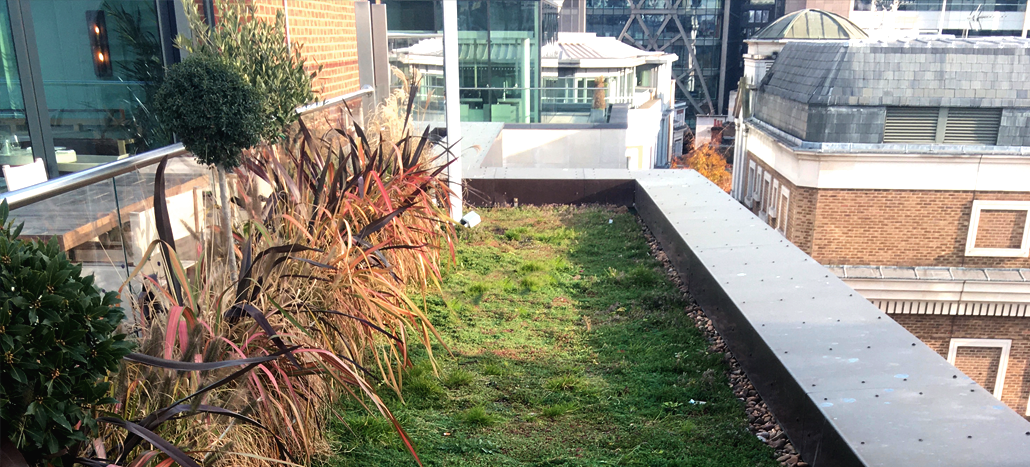
It seems the advantages of urban greening, and in particular green roof installations, just keep coming. New research from Tongji University in Shanghai, China has demonstrated, in lab conditions at least, that green roofs can remove up to 97.5% of microplastics from rainwater and trap it.
This discovery has massive implications for the removal of these harmful plastics from the environment. Previously dedicated wetlands, bioremediation ponds, rain gardens and swales had been assumed to be the most effective way of removing contaminants from excess urban rainwater. These obviously relied on filtering the water once it had already left the roof or surface where it landed. With this latest research opportunities are now presented for the reduction of these harmful and pervasive elements in our urban environments, and before they can spread beyond their arrival point.
“Our study highlights the powerful potential of urban green roofs to act as passive interceptors of atmospheric microplastics,” Research lead Professor Shuiping Cheng says.
In the study which used laboratory-scale mockups of green roofs, most of the microplastics were captured by the soil rather than on the leaves of the plants. But this also depends on the particulars of the plants: “Rhodiola rosea, which has leaves arranged in a rosette-like pattern, was better at capturing microplastics than Sedum lineare, with its thin, spiky leaves” says Cheng.
Of course, this is only a first step as a number of questions now need answering. What happens to the captured microplastic over time? For example, will the green roofs become too saturated over time and begin releasing the microplastics back into the environment? It also poses what might be uncomfortable questions about green roof installation materials themselves which, as the researchers point out, are also comprised of plastic elements and which, in the lab simulations, showed signs of ageing and degradation over the course of the experiment.
Despite this the research highlights an exciting opportunity to use green roofs to further benefit our urban environment and help solve a very real pollution issue. “A key next step is to validate these results under real-world conditions on full-scale green roofs,” states professor Cheng.
Or please contact us if you have a project or installation you would like to talk to us about. We are always happy to discuss your plans with you without obligation.
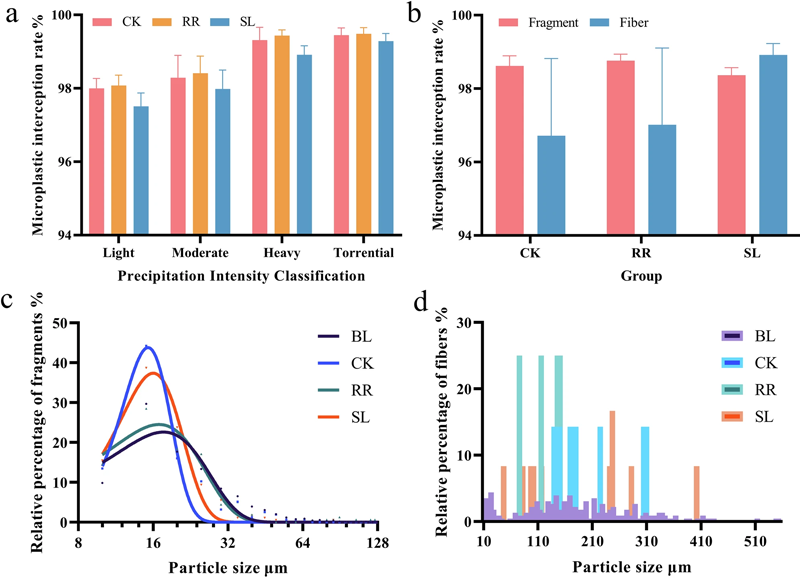
Microplastics interception efficiency of green roofs and particle characteristics of effluent microplastics.